

Casinos That Accept Litecoin in Australia: What to Know
 Available in AU
This guide separates Litecoin payment claims from Australian legal status, consumer protections and evidence about deposits, withdrawals and bonuses.

Table of Contents
- What Australia’s Rules Mean for Offshore Casino Searches
- Online Casino Payments: What’s Verified and What Isn’t
- How to Assess Casino Claims Without a Verified ‘Best’ Pick
- What ‘Best Litecoin Casino’ Can—and Can’t—Mean Here
- Slots and Bonuses: No Verified Litecoin Offers to Compare
- Casino Games and Litecoin: Separate Payment Claims from Game Claims
- Before You Try to Play: Account Checks and Payment Context
- Litecoin Deposits and Withdrawals: What the Evidence Does Not Confirm
- Live Dealer Searches Don’t Verify Litecoin Compatibility
- Litecoin Slots and Licensing: Don’t Treat One as Proof of the Other
What Australia’s Rules Mean for Offshore Casino Searches
A site advertising Litecoin payments may look like a straightforward option from Australia, but the payment method does not change the legal position. The Interactive Gambling Act 2001 prohibits operators from providing online casino games to people in Australia. That applies whether the site presents itself as a crypto casino, offers a mobile app, or lets customers use Litecoin.
The law is aimed at the operator’s provision of the service, not at explicitly criminalising an Australian player for using an offshore casino. That distinction matters, but it is not an endorsement or a guarantee of access. The Australian Communications and Media Authority (ACMA) oversees enforcement of the Act, so an offshore site’s willingness to accept Australian customers does not make its offer lawful here. Nor does a Litecoin option create an exception.
There is another practical point that is easy to miss: Australian consumer law does not protect you when you use an offshore casino. If a dispute arises over an account or funds, you cannot assume that the protections available for domestic consumer transactions will apply. A site’s own terms may describe how it handles complaints, but those terms are not a substitute for Australian consumer protections.
I would separate two questions before treating any offshore site as an option: whether it claims to accept Litecoin, and whether it is lawful to provide online casino games to people in Australia. The first does not answer the second. A payment logo or a page aimed at Australian visitors cannot override the Act.
So, when you come across an offshore casino that appears to take Litecoin, read the claim in that narrow sense: it is a statement about the site’s payment offering, not proof that the operator may legally serve Australians or that you have local consumer protection. The legal distinction is plain, even if the marketing is not.

Online Casino Payments: What’s Verified and What Isn’t
A crypto payment claim needs to name the coin. “Cryptocurrency accepted” is not enough to tell you whether a cashier supports Litecoin, and a statement about one coin does not establish support for another.
Bitcoin and Ethereum are described as allowing instant deposits and withdrawals with limited or no fees. That is a broad comparison of those two cryptocurrencies. It is not a Litecoin payment promise, and it does not tell you what would happen with a Litecoin transaction at a particular casino. I can’t confirm that an online casino serving Australians accepts Litecoin, or apply Bitcoin and Ethereum payment conditions to Litecoin.
That distinction matters when a page uses broad wording such as “crypto payments.” The phrase may leave the actual supported currencies unclear. A cashier could name particular coins, or it might not explain them clearly. Without Litecoin named as an accepted method, you have no sound basis to treat a general crypto label as confirmation.

The same caution applies across different kinds of casino pages. A mobile-friendly site, a live-dealer page, or a page mentioning pokies does not establish anything about its payment methods. The game format and the payment option are separate claims. One cannot verify the other.
I’d read payment wording literally. If a page mentions Bitcoin and Ethereum, take that as a statement about Bitcoin and Ethereum only. If it says “cryptocurrency” without naming Litecoin, don’t fill in the blank yourself. And if it advertises Litecoin in a headline but gives no clear payment details, the headline alone is not proof that Litecoin can be used.
There are several separate questions hidden inside the word “accepts.” Does the cashier list Litecoin? Does the operator permit it for the account in question? Are deposits and withdrawals both supported, or does the wording refer to only one direction? Does the stated fee information apply to Litecoin specifically? Each needs its own clear answer. A general statement about crypto does not settle them.
- Read payment wording literally
- Treat named currencies as distinct methods
- Look for Litecoin specifically in the cashier
- Assume “crypto payments” includes Litecoin
- Apply Bitcoin or Ethereum terms to Litecoin
- Treat a headline as proof of payment support
The same goes for speed. “Instant” is associated here with Bitcoin and Ethereum, but that does not establish Litecoin processing time. Nor does the phrase “limited or no fees” establish Litecoin fees. Even where a site names a coin, a broad claim about crypto should not be read as a specific quote for every currency. Payment details need to match the exact method being discussed.
Australia adds a more basic point: real-money online casino games cannot lawfully be offered to people physically in the country. So payment language should not be mistaken for confirmation that an online casino is authorised to serve Australian residents. A crypto option, if claimed, would not change that legal position.
For you, the practical takeaway is modest but useful: separate what a page explicitly says from what you might infer. Bitcoin and Ethereum are the named examples associated with instant deposits and withdrawals and limited or no fees. Litecoin is a different claim. Unless the wording directly identifies Litecoin and clearly explains the relevant payment conditions, there is no basis to assume those Bitcoin and Ethereum characteristics apply.
That’s not a technicality. Payment pages can compress several different ideas into one reassuring phrase, while the detail that matters to you—whether a specific coin is supported—remains unanswered. Treat named currencies as distinct methods, and don’t let a general crypto label do the work of a clear Litecoin statement. A headline is not a cashier.

How to Assess Casino Claims Without a Verified ‘Best’ Pick
A page calling something the best online Litecoin casino is making a comparison, not just describing a payment option. For that label to mean anything, you would need evidence that the named site accepts Litecoin, that the offer applies to Australian visitors, and that the claimed advantages can be checked against other operators. Without those basics, “best” is decoration.
I would not treat a polished ranking, a high place in a list or confident wording as proof. A recommendation should rest on details that can be independently confirmed, not on the number of times a site repeats its own claims. If the operator’s name, payment terms and relevant product information cannot be established, there is no sound basis for choosing a winner.
That matters especially with Litecoin. A general statement about cryptocurrency payments does not establish that a particular casino accepts this coin. Nor does a site showing a crypto logo prove that Litecoin is included, available to Australian users or supported for every part of an account. Those are separate claims, and each needs its own clear evidence.
What a meaningful comparison would require
Before calling one online casino better than another, I would want to see comparable, operator-specific information. At minimum, that means the site identifies itself clearly and states its Litecoin terms in language that leaves little room for interpretation. The details should relate to the actual operator, not to a general description of crypto casinos or an old list copied across multiple pages.
Assessing Casino Claims
- Verify the operator identifies itself clearly
- Confirm Litecoin terms are stated explicitly
- Check that the offer applies to Australian visitors
- Identify the specific criteria used for the “best” ranking
Then ask whether the recommendation explains its criteria. “Best” could mean the clearest payment terms, the most useful product information or something else entirely. If a page never tells you what it is measuring, its order of sites is just an order. A headline cannot do the work of a comparison.
The same standard applies when a page describes a casino as suitable for Australian players. A claim about one audience does not establish that every feature works for that audience. Read the wording closely: is it about Litecoin specifically, or cryptocurrency in general? Does it describe the named operator, or casinos as a broad category? Does it distinguish a confirmed feature from a possibility? Small distinctions, large difference.
Watch for claims that slide between categories
Some pages move from “accepts crypto” to “accepts Litecoin” without showing the step in between. Others use “online casino” and “live casino” as though a payment claim proves something about the games or format. It does not. A payment method and a casino’s other features are different subjects; evidence for one cannot fill a gap in the other.
Likewise, a general promise about a “no deposit” offer is not evidence that a particular Litecoin payment method is supported. Keep claims in their lanes. If a page bundles payment, game selection and promotional language together, look for a specific statement supporting each one rather than assuming the bundle is accurate.

I would also be wary of recommendation pages that use broad superlatives but give no basis for them. Words such as “top,” “trusted” and “best” sound decisive; by themselves, they tell you nothing about what was checked. A long list can create the same impression without establishing that any entry meets the stated condition.
Why there is no defensible winner to name
At present, I cannot point to a Litecoin casino for Australian readers and support a “best” verdict with verifiable operator and product details. Naming one anyway would turn an untested assertion into a recommendation. That is not a useful shortcut.
This does not mean every claim is necessarily false. It means a claim should not be mistaken for a confirmed feature simply because it appears on a casino page or in a ranking. Until the relevant details can be checked for the specific operator and audience, a best online casino with Litecoin remains a label, not a conclusion.
So if you are comparing sites, use a modest test: does the page identify the operator, state precisely what it claims about Litecoin, and explain how it reached its recommendation? If those pieces are absent or blurred together, set the ranking aside. No winner is better than a made-up one.
What ‘Best Litecoin Casino’ Can—and Can’t—Mean Here
If you’re looking for casinos that accept Litecoin in Australia, check that Litecoin deposits are currently available before you sign up. This list gives you a few operator details to consider as you assess your options.
License: Curacao Gaming Control Board OGL/2023/174/0082 (Dama N.V.) SpinsUp is listed with a Curaçao Gaming Control Board OGL held by Dama N.V. Check directly whether Litecoin deposits are available to you.
Payout speed: crypto ~90 minutes, fiat 1-5 days · Min. deposit: A$30 Kingmaker lists crypto payouts at around 90 minutes and fiat payouts at 1–5 days, with a minimum deposit of A$30. Confirm that Litecoin is supported for deposits before you proceed.
License: Curacao OGL/2024/1335/0780 · Min. deposit: EUR 20 Vegaz Casino is listed with a Curaçao OGL and a minimum deposit of EUR 20. Check whether it accepts Litecoin from Australia.
License: Curacao eGaming (Hollycorn N.V., since 2017) · Min. deposit: A$20-30 (depends on the offer) Playfina Casino is listed under Curaçao eGaming, with Hollycorn N.V. named as its operator since 2017. Its minimum deposit is A$20–30, depending on the offer; check directly for Litecoin availability.
License: Curacao eGaming (Roby Games Ltd) Roby Casino is listed under Curaçao eGaming, with Roby Games Ltd named as its operator. Check directly whether Litecoin deposits are available to you.
Payout speed: crypto 30-120 minutes, fiat 24-72 hours · Min. deposit: A$30 MrPacho lists crypto payouts at 30–120 minutes and fiat payouts at 24–72 hours, with a minimum deposit of A$30. Confirm that Litecoin is among the supported deposit options.
License: international iGaming licence – jurisdiction not named in the source · Payout speed: PayID 1-24 hours · Min. deposit: A$30 (PayID from A$10) House of Pokies lists an international iGaming licence, though the source does not name the jurisdiction. PayID payouts are listed at 1–24 hours; the minimum deposit is A$30, or A$10 for PayID. Check directly whether Litecoin is accepted.
License: Curacao Gaming Control Board JustCasino is listed with a Curaçao Gaming Control Board licence. Check directly whether it accepts Litecoin deposits from Australia.
License: Curacao (operating since 2017) · Min. deposit: A$20 Uptown Pokies is listed as operating under a Curaçao licence since 2017, with a minimum deposit of A$20. Check whether Litecoin is currently available as a deposit method.
Payout speed: crypto under 1 hour, PayID 1-3 business days · Min. deposit: A$20 (A$30 to qualify for the bonus) Ricky Casino lists crypto payouts under one hour and PayID payouts at 1–3 business days. Its minimum deposit is A$20, or A$30 to qualify for the bonus; confirm Litecoin deposit support directly.
“Best” sounds like a verdict, but it only means something when there is reliable information to compare.
That matters across the usual variations: a site described as the best Litecoin casino in Australia, a newer Litecoin casino, or a place with a welcome bonus. The wording changes; the basic question does not. Is there enough dependable information to say what the operator offers and what conditions apply? Without that, a recommendation is guesswork dressed up as a review.
A list is no safer just because it avoids choosing a winner. Naming several casino sites as Litecoin options would still imply that their payment support had been checked. The same goes for calling a particular offer the best bonus or describing a casino as suitable for Australian players.
“Best games” is another label that can blur separate claims. A casino’s general description does not establish which games it offers, and a mention of Litecoin does not establish that the currency can be used there. Those are distinct details. I’d treat them separately rather than let an appealing label do the work of evidence.
The Australian setting also changes how you should read promotional language. The Interactive Gambling Act 2001 prohibits operators from providing real-money online casino games to people in Australia. The Australian Communications and Media Authority enforces that law. A page calling an offshore site “best” does not make it an authorised option for Australians, and an offshore casino does not come with Australian consumer-law protection for its players. That is not a small-print distinction.

When a page presents a “latest” pick or a ranked list, check what the claim actually rests on. Does it identify the operator and clearly explain the basis for saying it accepts Litecoin? Are the relevant terms visible and current? Can you tell whether a bonus is tied to conditions? If those points are left vague, the label is doing more work than the detail. Even a polished page can leave you unable to confirm what it is promising.
I’d also be wary of treating repeated claims as independent confirmation. Several pages can repeat the same description without showing how it was checked. A clear answer should distinguish an operator’s own statement from an independently confirmed detail, and it should not turn uncertainty into a recommendation.
So, here, “best Litecoin casino” can describe what someone hopes to find: a clear, verifiable comparison. It cannot honestly serve as a recommendation when the operator, Litecoin support and offer details cannot be substantiated. No top pick. No defensible list. The sensible reading is narrower: don’t mistake a ranking, bonus label or “latest” badge for proof.

Slots and Bonuses: No Verified Litecoin Offers to Compare
A Litecoin bonus sounds straightforward on a banner: make a deposit, get extra play, perhaps claim a no-deposit offer without funding an account. But those phrases are not enough to establish that an offer exists, that it applies to Litecoin, or that an Australian reader can use it. I would not treat a headline as proof of any of those things.
A neat promotional label can still leave the important conditions unanswered.
What a bonus label leaves out
A welcome offer might appear to be tied to opening an account; a deposit offer might appear to depend on paying in Litecoin; a no-deposit offer might sound as if no payment is needed. Those descriptions do not establish the terms. They do not tell you whether an offer is actually available, who can claim it, or which payment method qualifies.
Attention: A promotion using the word “crypto” without specifying Litecoin does not prove that Litecoin qualifies for that particular bonus.
That distinction matters. A promotion may use the word “crypto” without specifying Litecoin, or mention Litecoin on a page without showing that it qualifies for a particular bonus. Neither wording proves that the two are connected. I would look for clear, consistent terms from the operator rather than infer eligibility from a badge or a broad claim.
The same caution applies to claims about free Litecoin play. “Free” can describe a headline, not a usable offer with clear conditions. Without terms that identify the offer and explain eligibility, there is nothing reliable to compare. No magic in the label.
Claims about online slots
Searches for Litecoin online slots or video slots can bring together two separate claims: that a particular game catalogue exists and that Litecoin is accepted for it. A page using both terms does not, by itself, establish either claim. It also does not prove that a bonus applies to those games.
For Australian readers, there is a further boundary: real-money online casino games are prohibited services when offered to people in Australia. So a promotional page should not be read as a sign that such an offer is lawful or available locally. I would not treat a list of titles, a banner, or a “best” label as a recommendation to play.
This is why a comparison of “best” Litecoin slot sites or bonuses would be misleading without reliable details behind each claim. Naming a winner would imply that its offer, game access and relevant conditions had been checked against alternatives. A slogan cannot do that work.
If you encounter a claimed Litecoin bonus, read the wording closely and avoid assuming that a general crypto reference includes Litecoin. Check whether the terms actually name the payment method and describe the offer, rather than relying on a promotional heading. If those details are unclear, there is no dependable basis for valuing the offer or comparing it with another.
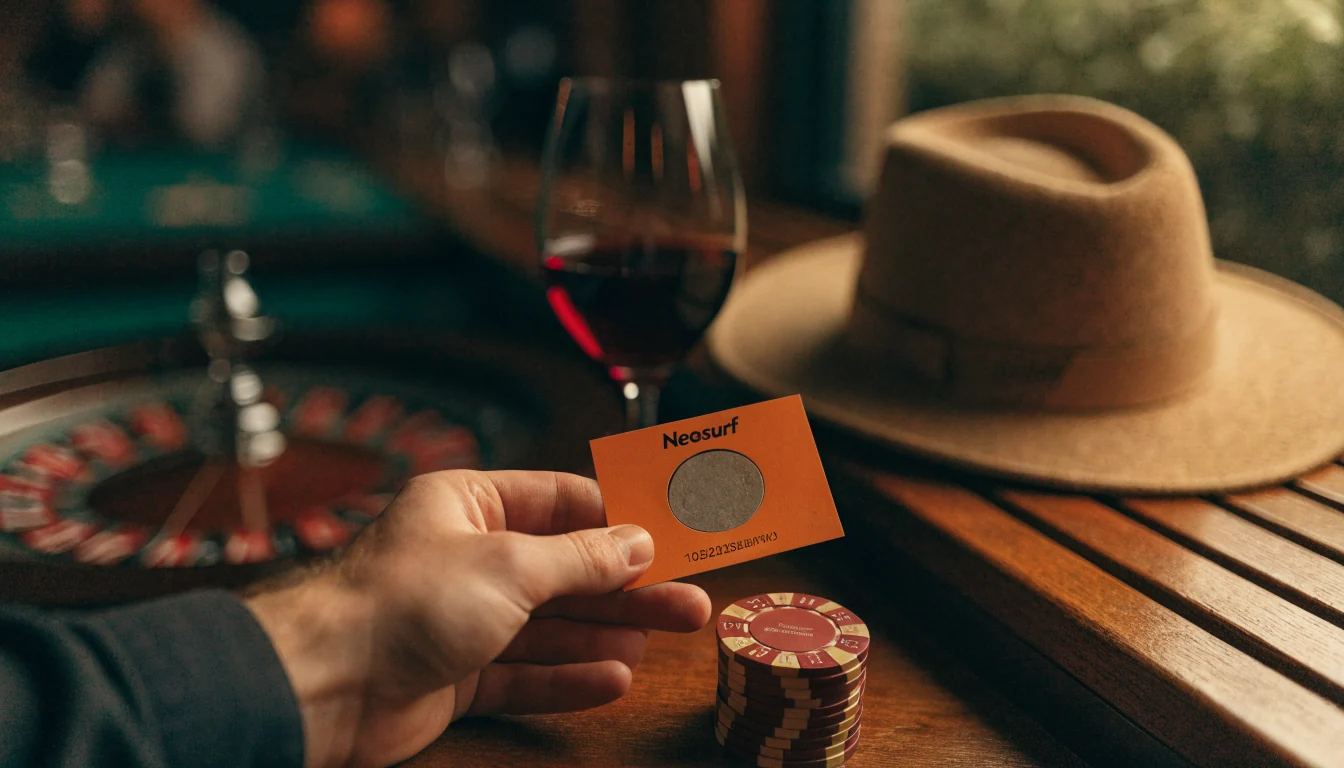
For the same reason, I would not assign value to a supposed bonus simply because it is described as free, generous or exclusive. Those words tell you how the promotion is being presented; they do not establish what a person can claim.
Casino Games and Litecoin: Separate Payment Claims from Game Claims
“Litecoin casino games” can sound like a single product, but it mixes two different claims. One is about how an operator says it accepts payment; the other is about the games it makes available. A statement about one does not establish the other.
A site might describe itself as crypto-friendly without identifying any particular game that can be played there. Likewise, a game title or catalogue description does not show that Litecoin is accepted. The words “Litecoin-compatible” need a clear subject: do they refer to the cashier, the operator, or a specific game feature? Without that distinction, the label tells you very little.

The same applies to searches for an LTC casino game or games you can play with Litecoin. Those phrases can imply that a special game has been built around the currency. Litecoin is a payment method, not a game format. A payment claim alone says nothing about a title’s rules, software provider, features, or availability. Those details should not be inferred from a coin logo or a broad crypto label.
Keep game claims separate from payment claims. If a description names a catalogue, it should make clear what games are included and what the claim covers. If it mentions Litecoin, that still does not establish a compatible catalogue. Don’t let one vague label stand in for both.
A search for an anonymous Litecoin casino can blur the same boundaries. “Anonymous” is a separate claim about how an operator handles identity and account checks; it does not identify a game or prove anything about a game catalogue. The word may sound reassuring, but on its own it is not a useful description of the games.

And a Litecoin casino bonus is not a game feature. A bonus label does not tell you which games are included, whether any conditions apply, or whether the offer is available to you. Treating it as proof of a particular game experience is a leap.
There is also an important Australian context: the Interactive Gambling Act 2001 prohibits operators from providing real-money online casino games to people in Australia. This includes casino-style games such as poker, table games and pokies. So a promotional-sounding game description should not be read as an invitation or as confirmation that the service is lawful to offer here.
The useful habit is simple: read each claim for what it actually describes. Payment is not a catalogue. A catalogue is not proof of payment support. A label is not much to go on.
Before You Try to Play: Account Checks and Payment Context
Before any financial transaction, an online casino may ask you to complete a Know Your Customer (KYC) check. That means confirming who you are before money moves through the account. It is a practical step to factor in when considering any casino account, rather than something you can assume will be skipped because you want to use Litecoin.
Searches for a no-KYC Litecoin casino can make the process sound optional or tied to one payment method. The general requirement is broader: online casinos typically ask customers to complete identity checks before financial transactions. That does not establish a separate Litecoin procedure, nor does it tell you what documents a particular operator would request. Don’t treat a claim about crypto as proof that account checks won’t apply.
KYC can also affect when you are ready to transact. If an account requires verification first, you may need to provide the requested information and wait for it to be reviewed before proceeding. I’d read the account and cashier conditions before creating expectations around payment access. A payment option and an account-verification process are separate things.
Online casinos typically require identity checks (KYC) before financial transactions, regardless of whether you intend to use Litecoin.
There is another distinction worth keeping clear: a general KYC requirement does not confirm that a site accepts Litecoin, or that it offers any particular games. Those are separate claims. Likewise, a phrase such as “play without verification” should not be taken as a reliable description of how a casino handles financial activity.
For an Australian reader, this is about transaction readiness, not permission to use a particular service. Keep your personal details secure, and avoid sending identity documents through an untrusted channel. If you cannot establish who is asking for the documents or how they will be handled, stop there. A rushed sign-up is a poor time to hand over sensitive information.
In short, expect identity checks to be part of the account process before financial activity. Don’t assume Litecoin changes that. Simple, but easy to overlook.
Litecoin Deposits and Withdrawals: What the Evidence Does Not Confirm
A Litecoin payment should not be assumed to work like a card transfer or a bank payment. Before treating any claim about deposits or withdrawals as reliable, you would need clear terms for the actual payment route: whether Litecoin is accepted, how a transaction is initiated, what minimums or maximums apply, whether charges are added, and how long a withdrawal may take. Those details can differ by operator and payment method; a claim about one cryptocurrency does not settle them for another.
Similar technology is not a promise of identical processing, costs or availability. Dry, but important.

So be wary of wording such as “instant Litecoin withdrawal” unless the terms explain what instant means, when the processing clock starts, and whether network confirmation or operator checks can add time. A deposit appearing quickly does not, by itself, tell you how a later withdrawal will be handled. Nor does a headline about fast payouts reveal whether fees, transaction limits or currency conversion apply.
The same care applies to a claim that a site accepts Litecoin deposits. Read the payment terms for both directions of travel, not just the deposit instructions. Check whether the stated conditions are specifically about Litecoin and whether they cover withdrawals as well. If the terms only discuss Bitcoin or Ethereum, do not treat them as a substitute.
Searches for an instant Litecoin casino withdrawal are looking for a concrete promise, but a safe decision needs concrete terms, not a label. If the withdrawal route, timing, costs or limits are unclear, do not build a budget around an assumed outcome. And do not send funds simply to test whether a payment claim works.
In Australia, real-money online casino services are prohibited for operators, and Australian consumer law does not protect people using offshore casinos. A payment description does not change that position. Keep the distinction plain: general statements about Bitcoin and Ethereum are not Litecoin terms, and a promotional claim is not a guarantee of a completed withdrawal.
Legal Risks
The Interactive Gambling Act 2001 prohibits operators from providing real-money online casino games to people in Australia, and Australian consumer law does not protect you when using offshore casinos.
Live Dealer Searches Don’t Verify Litecoin Compatibility
A live-dealer label and a Litecoin payment option are separate claims. One does not confirm the other: a service describing live tables has not thereby shown that it accepts Litecoin, and a crypto payment reference does not establish that live-dealer play is available.
I can’t identify a live-dealer casino for Australian players as Litecoin-compatible. Treating the two features as a confirmed package would go beyond what can be said with confidence. That matters because polished pages can make separate features look as though they belong together, when the wording may not establish that they do.
If you come across a claim, read it narrowly. Does it explicitly connect Litecoin with the operator’s live-dealer offering, or does it mention cryptocurrency in one place and live tables somewhere else? Those are not equivalent. Nor does a general claim about a crypto casino tell you which coin is supported or which formats are included.

The same caution applies to labels such as “live dealer” and “live casino”. They describe a format, not a payment method. A page that names dealers or streamed tables still needs to state the payment details separately before you can infer Litecoin compatibility. A logo or a broad “crypto accepted” statement is not enough to establish that particular combination.
I would not treat a live-dealer listing as proof that Litecoin works there, or assume a Litecoin claim covers live play. Unless the operator’s own terms clearly connect the coin and the live-dealer service, the compatibility remains unconfirmed. That is a practical distinction, not a technicality.
For Australian readers, there is a further boundary: the Interactive Gambling Act 2001 prohibits operators from providing real-money online casino games to people in Australia. A payment claim does not change that rule. Keep the question focused on what the claim actually says, and don’t mistake two neighbouring features for one verified service.

Separate claims. No shortcut.
Litecoin Slots and Licensing: Don’t Treat One as Proof of the Other
A site’s claim that it accepts Litecoin and has a licence are two separate claims. Neither one proves the other, and neither changes the rules for people in Australia. Under the Interactive Gambling Act 2001, operators cannot provide real-money online casino games, including pokies, to people physically located here.
That distinction matters when a website presents a licence badge beside a Litecoin payment logo. The badge may refer to an overseas authority; it does not make the service lawful to offer to Australian residents. The payment logo, meanwhile, says nothing about who oversees the operator or what protections apply if a dispute arises. Two symbols on a page. Not a safeguard.
The Australian Communications and Media Authority enforces the Act. It can take action against prohibited services, including seeking to have offshore sites blocked. Players are not explicitly criminalised by the Act for using offshore sites, but Australian consumer law does not protect people who use offshore casinos. So a claim of being a “trusted” or “licensed” Litecoin casino should not be read as a promise of Australian oversight or recourse.

I would separate the claims rather than letting one lend credibility to the other. A licence statement is not proof that Litecoin works for every transaction, and a Litecoin option is not evidence that a site is authorised to provide casino games in Australia. The same applies to pages that pair licensing language with claims about pokies: those details do not override the law.
For an Australian reader, the key point is not whether a site uses the word “licensed” or displays a crypto logo. It is that offshore licensing does not permit an operator to offer prohibited online casino games to people here, and it does not bring the service under Australian consumer protections. A badge is not local protection.
How do you check if casino sites accept Amex deposits?
Check the casino’s cashier for American Express as a deposit option. Some casinos do not accept Amex, and an issuer may also block payments to a particular site.
What are the deposit and withdrawal limits at the best Amex casinos?
Amex deposit and withdrawal limits are set by each casino and can vary. Check the limits shown by the casino before making a transaction.
How can I know if an online casino will accept American Express?
Look for American Express in the casino’s cashier or payment options. Some casinos accept it, but others do not.
Can you use an American Express gift card at an online casino?
Yes, at casinos that accept American Express, a gift card can be used for deposits only.
Are casino Amex payments instant?
Amex deposits are processed instantly. Withdrawals can take up to five days to clear.
Created by the ”Levelupcasino2.net” editorial team.